
Spooky Recommendations.
Spooky recs for Fall.

Well, it’s that time of the year again, and that means another list of “spooky” recommendations. Unlike last year where it was mainly comics, this time I’ll be talking about all things spooky in a multitude of mediums. So, when reading this, you may find a great book you’ve never read, or a new album you’ve never heard. So without further ado, let’s jump into it.
Blue In Green.
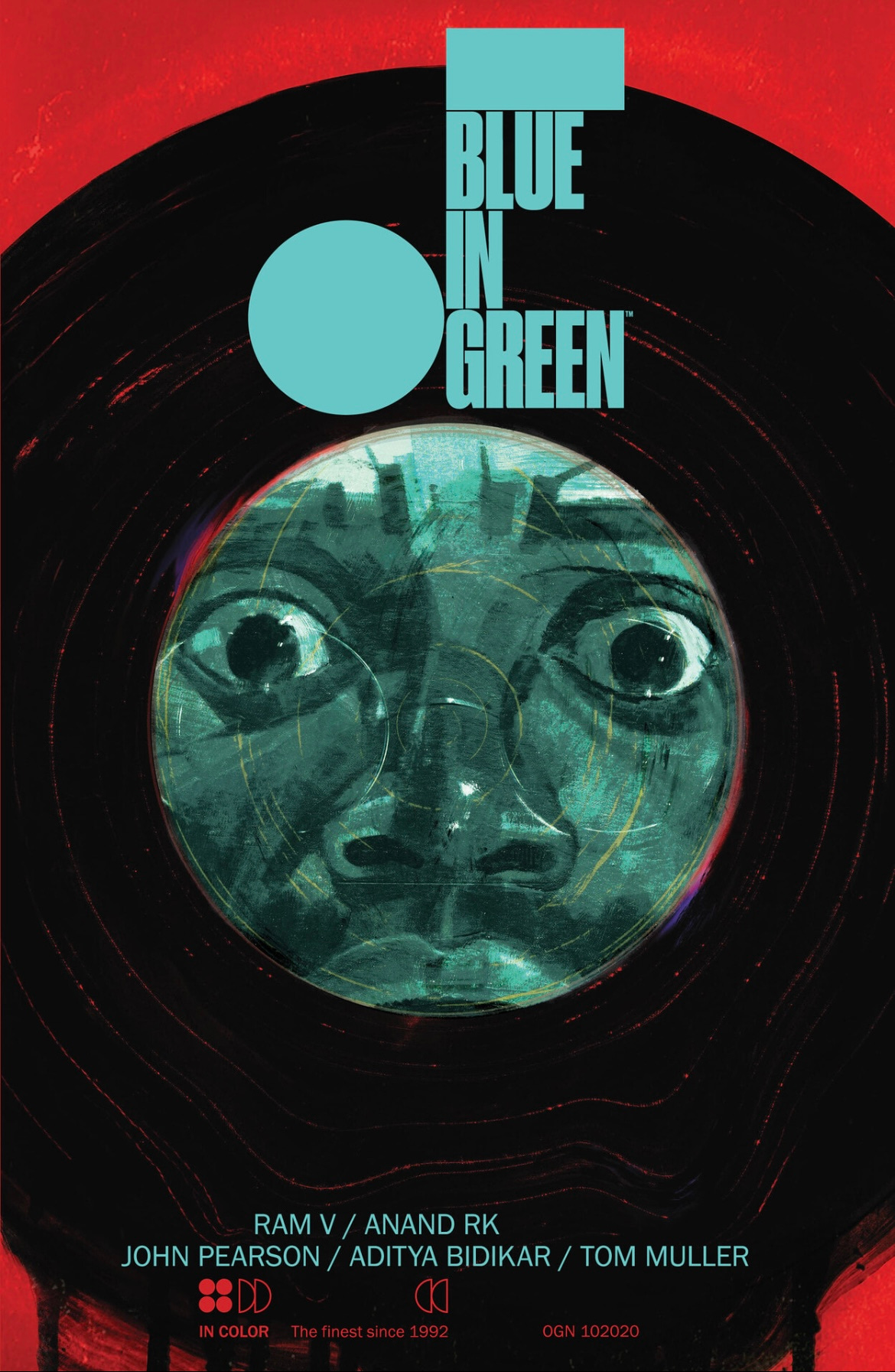
Blue In Green is a graphic novel written by Ram V, with art by Anand Rk, colors by John Pearson, and Letters By Aditya Bidikar.
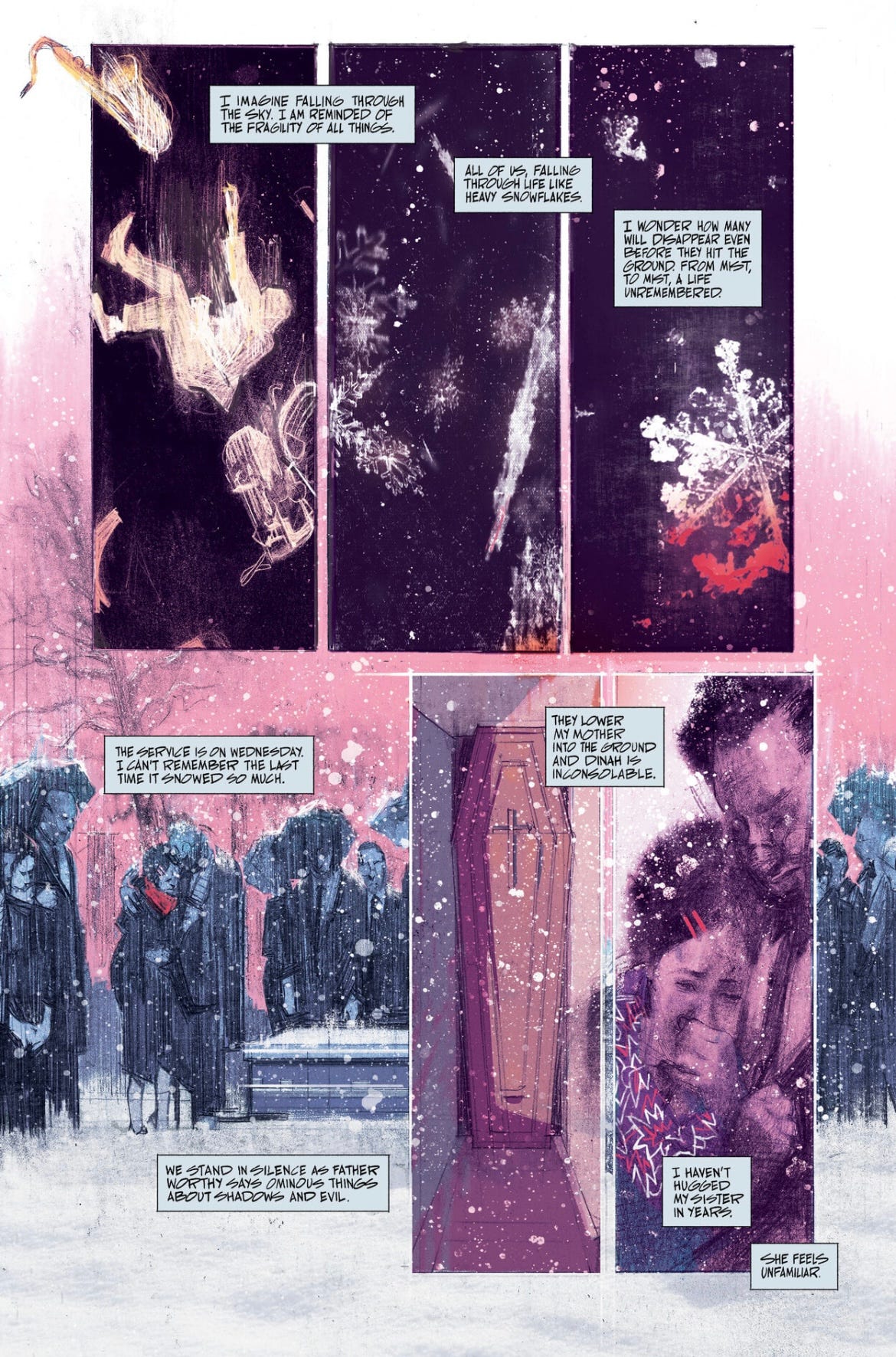
Blue In Green follows Erik Deiter as he returns to his childhood home in the wake of his mother’s funeral. It is there where he finds a photograph of a jazz musician from a bygone era performing at a club, which sends him into a seemingly never-ending spiral into the surreal depths of his own musical lineage.
I’ve been extremely vocal about my love of the horror genre, and my love of comics, but what most don’t know about me is that I love Jazz. Ever since I was little, I’ve always found myself drawn to the era of Swing music and classic Jazz tunes. Something that Ram has spoken about when asked about this book is his belief that Jazz can be haunting, something that I fully agree with and never fully realized until I read this. Looking back, that’s probably the reason I fell into the genre, just like horror, there’s something oddly haunting yet therapeutic and beautiful about Jazz. A droning tune that seems to go on forever, one that you can’t really find your way out of, full of improvisation and expression. Yet you never want it to end, because it’s there where you feel a sense of relief, of belonging.
This comic constantly had me on edge and genuinely creeped out throughout my read, and I really think it’s because of the perfect mix of Ram’s elegantly crafted prose and the scarily detailed yet surreal art and colors by Anand Rx and John Pearson.
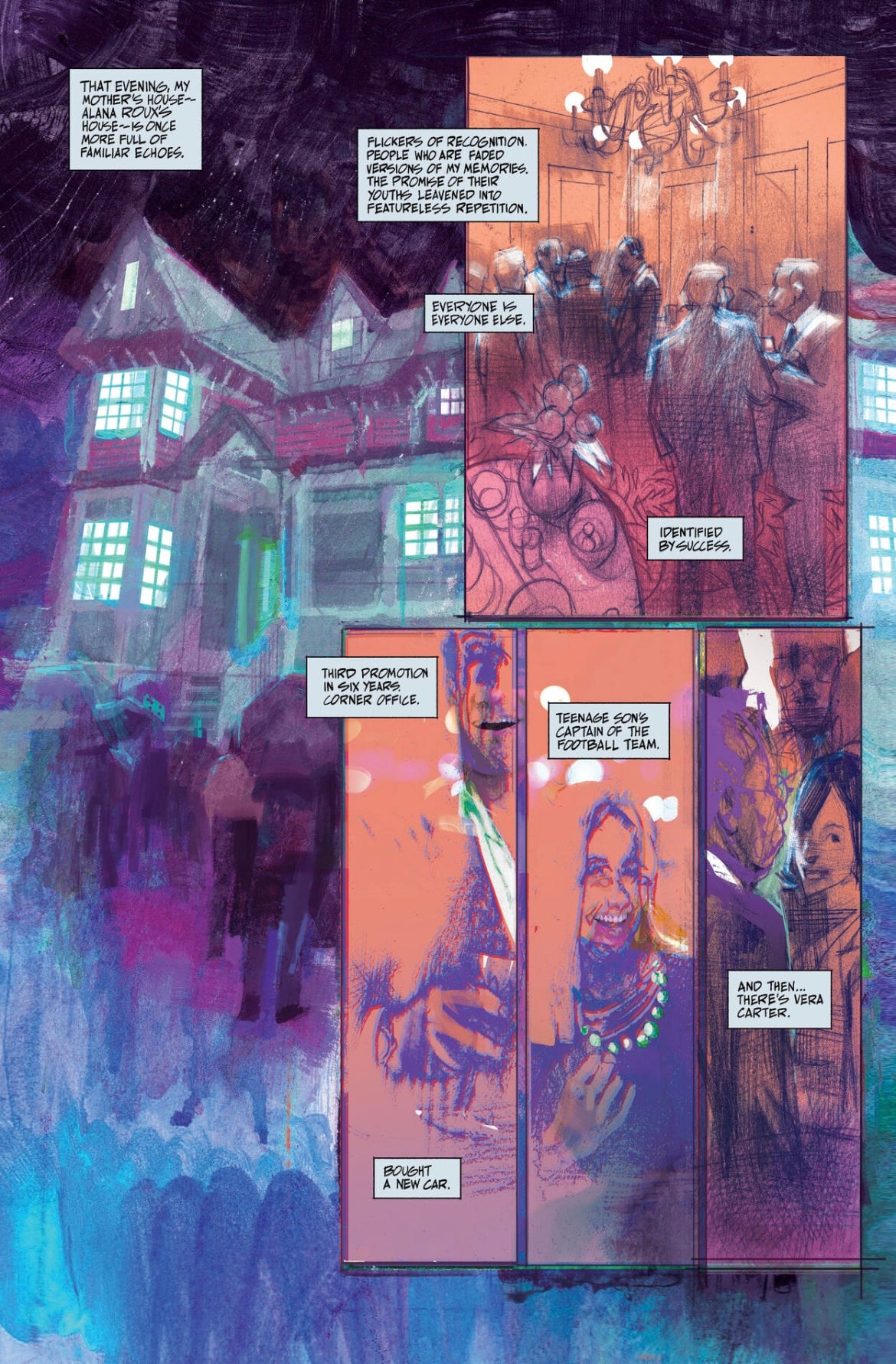
As a writer myself, I have to talk about the way that Ram V writes. I have never read a comic from Ram that I didn’t like; he is such a genius when it comes to the way he writes his comics. They feel like they are more than just that, more poetic, and accessible to non-comic readers, while also showing off what makes the medium so damn special. With lines in the book like, “The dead don’t become ghosts until we start looking for them.” And “people who are faded versions of my memories. The promise of their youths leavened into featureless repetitions.” Speaking straight to my soul in a way no other comic has done. I find this book to be extremely special. With many touchstones of a classic noir narrative, Ram and company manage to craft an extremely heartfelt and horrific story about grief, trauma, the burden of success, and overall responsibility. If there’s anything that I would want anyone to check out the most in this post, it’s this graphic novel. After you finish it, throw on some Jazz and relax, take a breather, and think, that’s all I ask.
Honestly, I love this comic so much, I could go on and on about its different themes, the way it weaves its Jazz influences into the characters and story. I’ll probably write a whole spoiler-filled analysis and essay on this book in the future. So if that’s something anyone would like to see, I’d be more than happy to do it.
Akira Yamaoka.
If you follow me on any social media or know me in person, you’d know it’s very apparent my love for the Silent Hill franchise. A huge reason I and so many others love Silent Hill is the atmospheric, character-driven, sometimes Lovecraftian horror stories that are told through a psychological lens, and for me, most importantly, the music. The driving force behind said music is the one and only Akira Yamaoka. With influences like Angelo Badalementi and Portishead, just to name a few, Yamaoka gives us some of the best atmospheric and beautiful songs within any video game franchise.
A few of my favorites being “Promise (Reprise) from arguably the best and most well-known game in the franchise, Silent Hill 2.
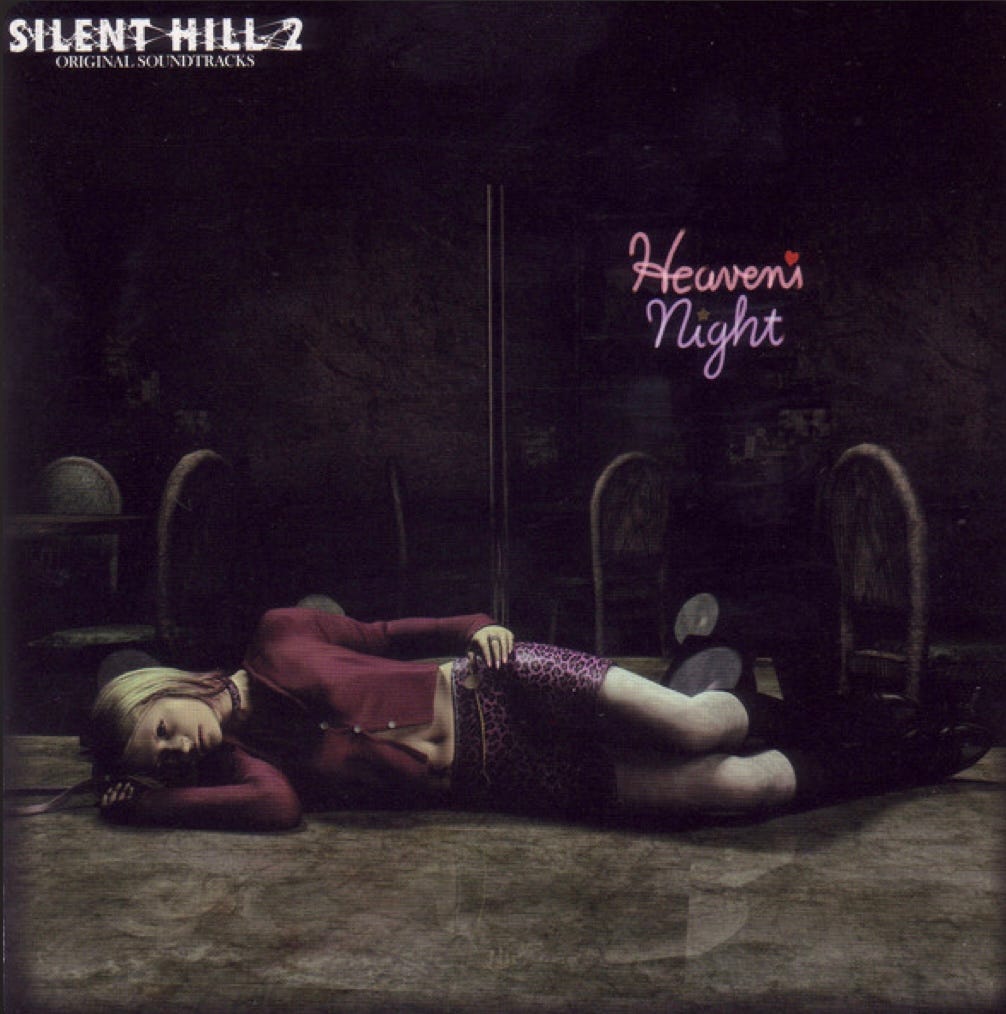
A soft piano instrumental that is a more relaxing and therapeutic song than many within the franchise. Just a beautiful song in general, and one I listen to all the time when I write. Or the opening track on the Silent Hill 2 Soundtrack, “Theme of Laura” which honestly just fucking rocks. Songs like this are what we as the player hear as we guide our main protagonist, James, through his own psychological nightmare to find his wife, Mary.
Though, my personal favorite of his work is from the Silent Hill 3 Soundtrack, which feels the most Portishead-inspired of them all, in my humble opinion, and I love Portishead, so it makes sense why Silent Hill 3 has my favorite soundtrack.
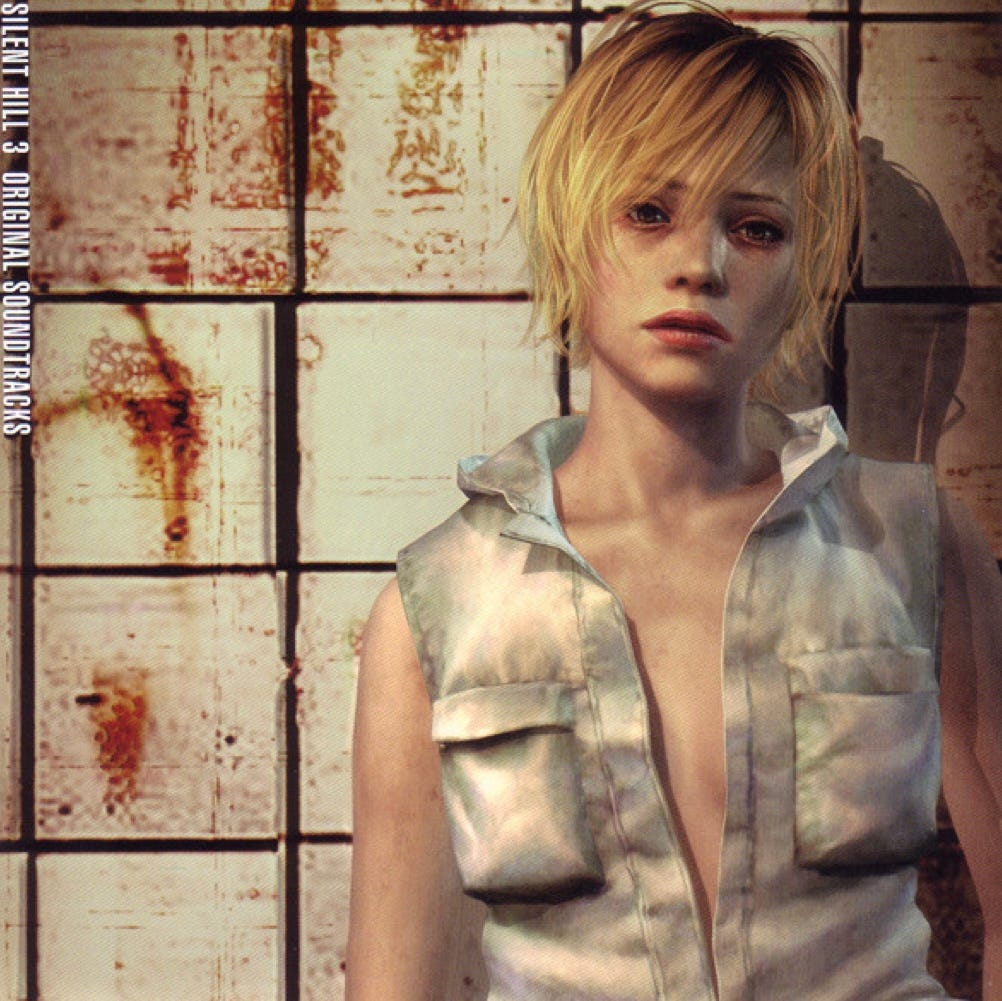
From “You’re Not Here” a fast-paced rock song with vocals to match, leaving you with an excited yet unsettling feeling. “End of Small Sanctuary” or “Sickness Unto Foolish Death”, which helps slow things down just a little, allowing you to catch a breath. With extremely soft ambient tracks like “Float Up From a Dream” and “Never Forgive Me, Never Forget Me”, this soundtrack has all the touchstones for a cold foggy night filled with existential dread, in the best way imaginable.
Around this time of the year, I find myself wandering through the endless fog listening to these songs more and more. Though unlike Harry, James, or Heather, I have no specific reason to. No daughter to save, no revenge mission, no dead wife waiting at our special spot. I feel a weird feeling of peace within the fog, an overwhelming ethereal sense of comfort, and I know that the music of Akira Yamaoka is a huge reason for that. So do yourself a favor and listen to these tracks, play the games, hell, spend an early cold morning listening to these songs and go for a walk, or a drive, and you will feel a whole lot different after, trust me. It’s therapy.
Clive Barker.
Clive Barker is a name in the genre that everyone who loves horror has to know. The man wrote the novella The Hellbound Heart, which he then adapted to screen into the cult classic Hellraiser. His novel Cabal became Nightbreeder, The short story The Forbidden became Candyman, etc, etc..
The thing I find myself particularly fond of when it comes to Clive Barker is that he was never afraid to be himself. Whether that be in the stories he writes, the paintings he makes, or the films he directed, they are all uniquely him. His stories are sometimes disturbing, sometimes downright vile, but with an elegance to his prose, they become beautiful, and that’s why we, as his fans, constantly find ourselves drawn back for more. I think this all goes back to one of my favorite quotes from him where he says, “I don’t think of myself while I’m writing as a writer, I think of myself as a journalist reporting on something I’m seeing.”
Really, I’d recommend just about anything from Mr. Barker, but if I had to choose one, I’d recommend the short story from Books of Blood, titled In the Hills, the Cities.
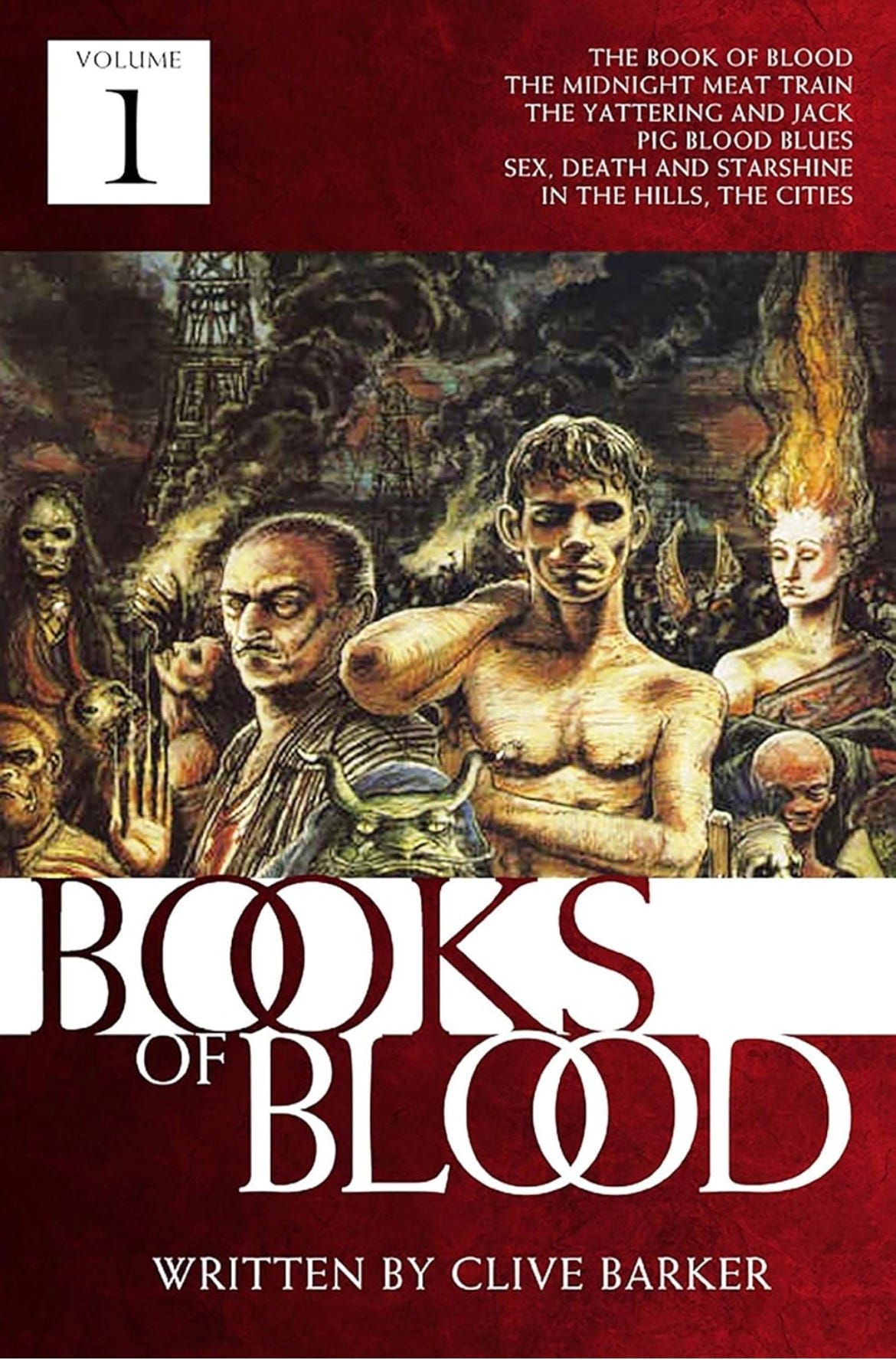
In the Hills, the Cities follows a couple on their honeymoon trip throughout Yugoslavia. We see Mick and Judd start to realize how bad their relationship truly is, and how incompatible they really are. They argue and tensions rise until finally they stop the car. Mick gets out and wanders into the empty road, as Judd waits, hoping for another argument to ensue. But what comes in its place is quite the opposite, Judd follows Mick into a cornfield, and in Barker’s words,
“It was good love they made, good, strong love, equal in pleasure for both; there was a precision to their passion, sensing the moment when effortless delight became urgent, when desire became necessity.”
Two bodies entangled as one, it’s beautiful, isn’t it?
Ahead of them in the twin cities of Popolac and Podujevo, the townspeople prepare. You see, the cities have a ritual that they attend, an act that brings them ever so close to one another, not all that different from Judd and Mick, though not remotely as beautiful or kind. That’s all I’ll say because I don’t wanna spoil the best parts of the story, because I believe anyone who reads this needs to experience this story for themselves.
In the Hills, the Cities is a very important story within the legacy of Clive Barker as it’s one he had to fight for, all because of Mick and Judd’s relationship and the scene in the cornfield.
You see, Mick and Judd are a queer couple, not all that crazy to think about now, but when Clive wrote this story in the mid-eighties, things were very different culturally. He had editors telling him he can’t publish this because it was “offensive”, while Barker himself, the author of the story, is a gay man. Which is more offensive, telling a gay man that a queer couple is “offensive”, or writing a queer couple with the reverence of any other beautiful relationship? You tell me.
He fought for the story and he won, as he’s always done, and In the Hills, the Cities would go on to win the British Fantasy Award for Short Fiction the following year. So check this story out, it’s incredible, and check out some of Clive Barker’s other work if you haven’t. (Footnote: if you can get your hands on the comic Clive Barker: Tapping the Vein, in book two, there’s an adaptation of this story drawn by John Bolton).
Betty Boop: Snow White/ Cab Calloway.
I’m sure many people are familiar with this legendary piece of animation. Most of this piece is a Betty Boop take on Snow White. While it is undoubtedly great, right now I’d like to focus on a specific sequence of Koko the Clown singing “Saint James’ Infirmary”, whilst transforming into different spooky characters, traveling through what seems to be the underworld.
Genuinely such a great and unsettling cartoon. Presented by Max Fleischer, Directed by Dave Fleischer, and Animated by Roland C. Crandall. This specific “Saint James’ Infirmary” sequence is so good because of great Cab Calloway dancing and singing, which was then animated using a technique known as rotoscoping.
Rotoscoping is a technique that many animators used in the early days of cartoons, where animators would trace over live-action footage frame by frame, allowing them to give the characters very lifelike and complex movements, without it looking clunky or stiff.
Max Fleischer would patent the new technique in 1917, using it for his character Koko the Clown. A character I’ve always found myself drawn towards, if you didn’t know, I really love clowns. (I’m no expert on animation, so please forgive me if I did a horrible job explaining that).
This Betty Boop episode is an eerie one for sure, but also one that I feel is very important and interesting to the medium of animation, as well as it having an absolutely awesome song and dance scene from Cab Calloway, it’s a perfect small spooky watch. The best part is that it’s completely free on YouTube, so I’ll drop a link here for anyone who’s interested.
It’s been a while since I’ve posted here (about six months to be exact). I just wanted to apologize for that. I made it a goal this year to post more, and I totally haven’t done that. Life’s felt well, Kafkaesque lately to say the least, and I’ve found myself extremely burnt out. All that being said, I do extremely appreciate the people who stick around and read my stuff whenever I post it, y’all are the best, and I can’t thank you enough. And to the new people who maybe just found this post, stick around, I have some cool essays and comics coming up that I’m really excited to write. Once again, thank you so greatly. Go make some comics, fuck AI, and have a great day.
Tony I didn’t just like this post, I absolutely loved it. Fascinating, I’m so impressed. I knew you liked clowns, but I wasn’t aware of how much you loved jazz. Maybe you got that from me… When I was young, we went into jazz clubs in Rochester and listened to some of the best. I’ve loved jazz my whole life. You did a great job with this article, you touched on several things I will go back and look up. Keep it up, bud! ❤️Nona